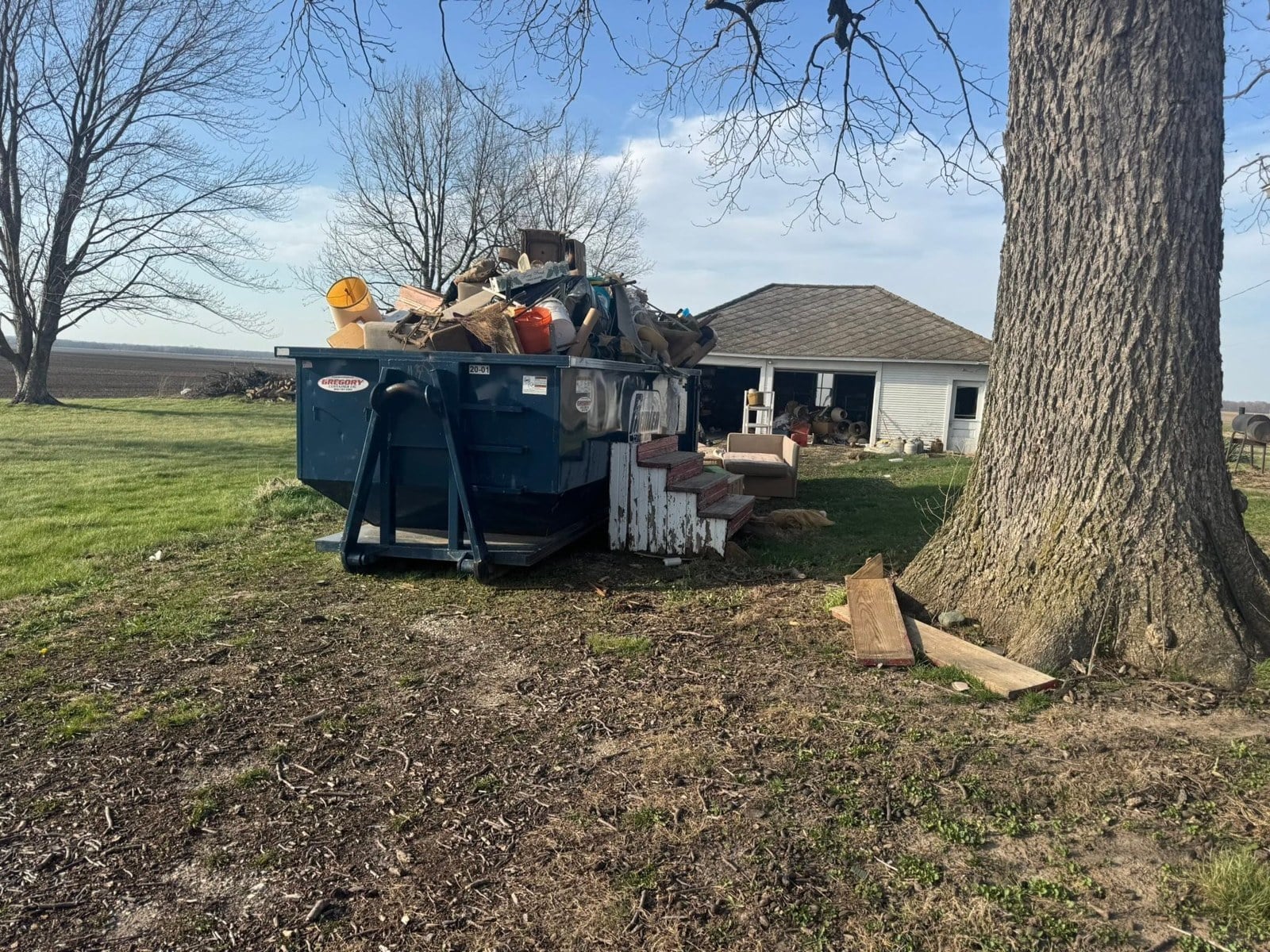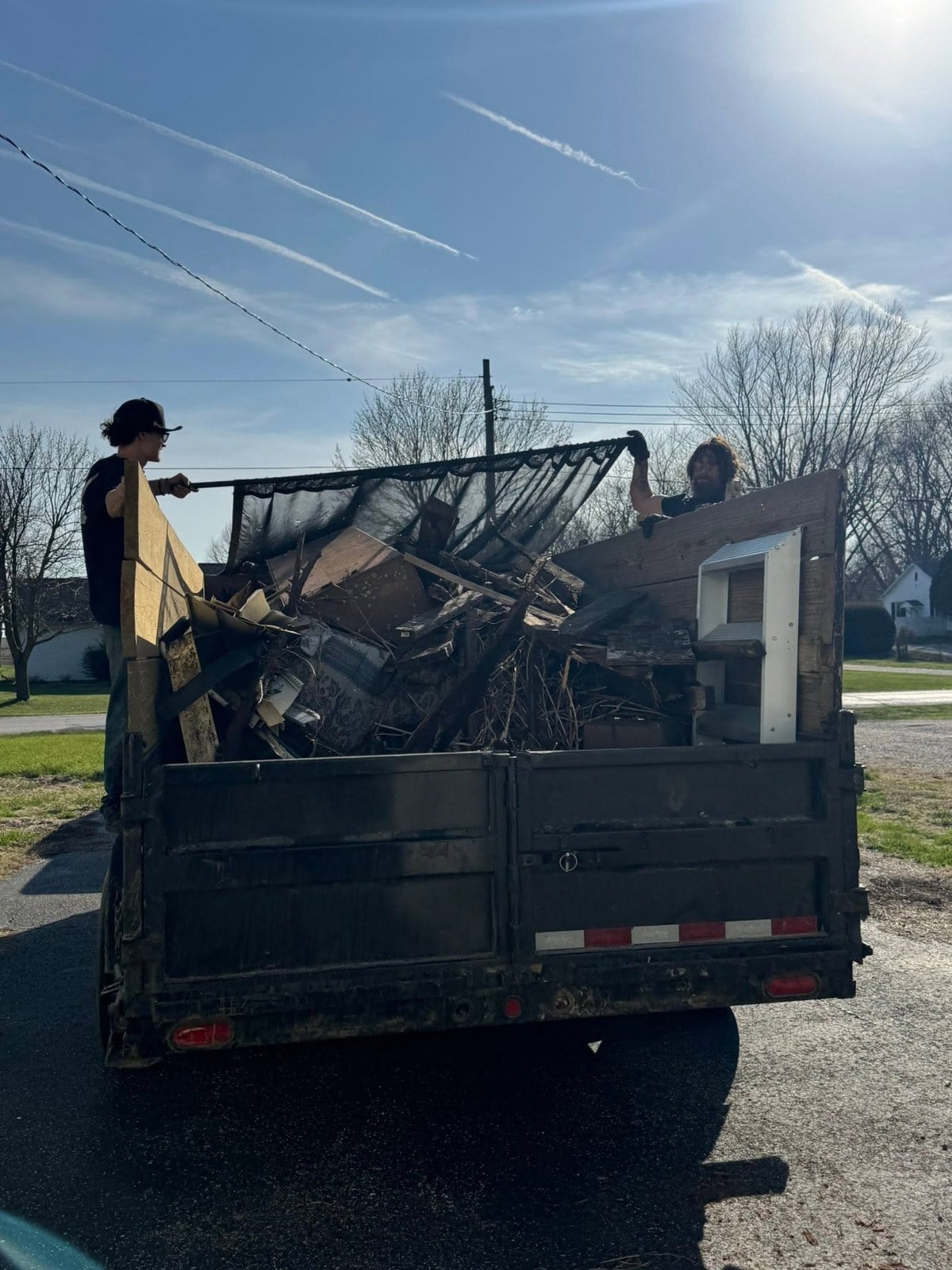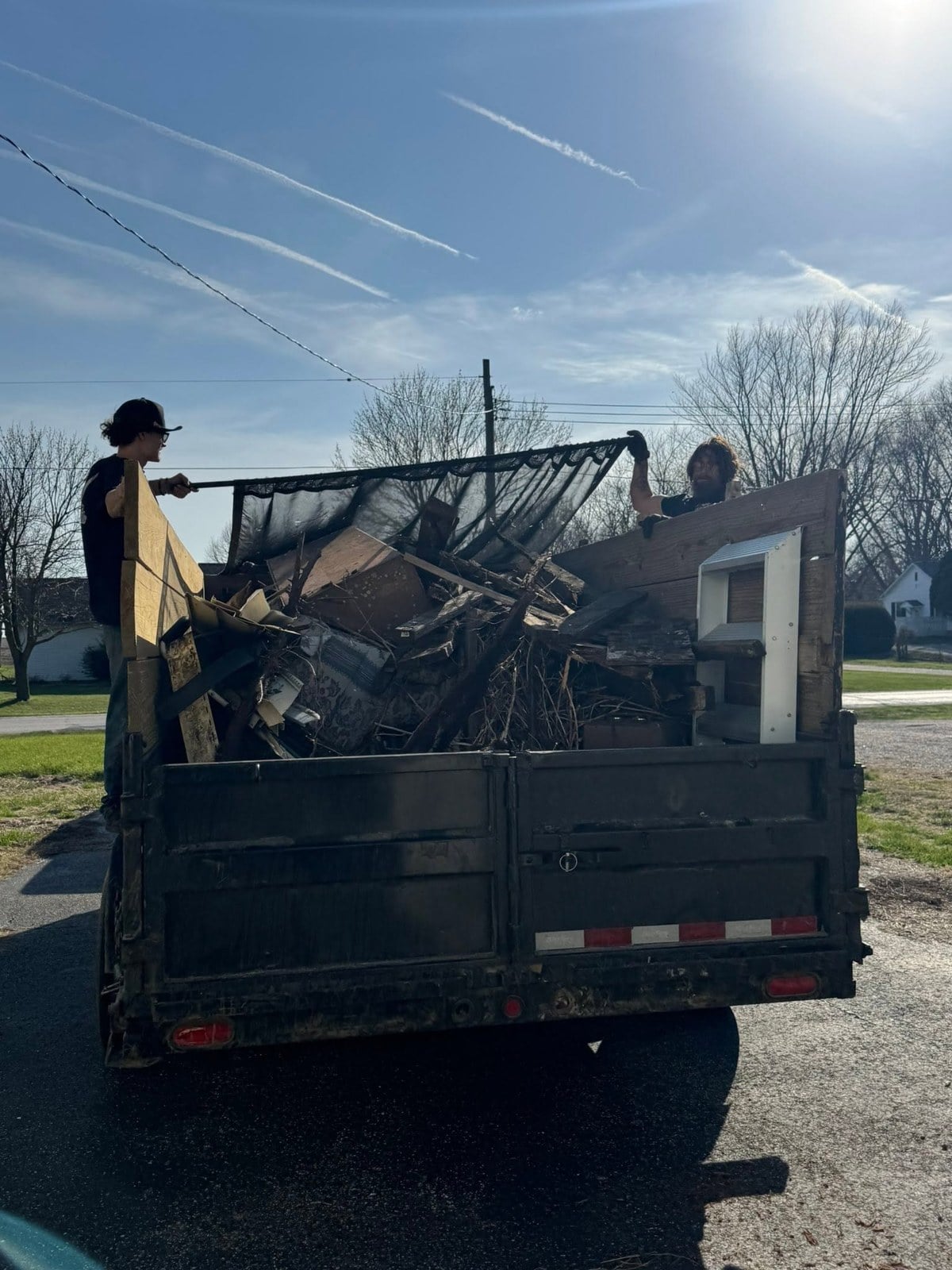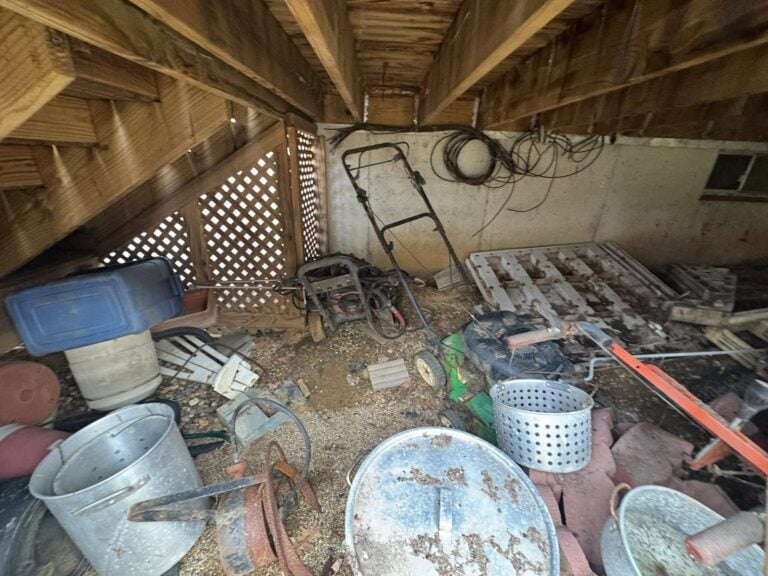
You can put almost anything that came out of a house, garage, barn, or remodel into a rental dumpster: furniture, boxes, household junk, drywall, lumber, cabinets, flooring, shingles, fencing, brush, and appliances that do not hold refrigerant. What has to stay out is a shorter list that includes tires, paint, electronics, batteries, propane tanks, and chemicals.
That covers the easy cases. The questions we actually get by text are about the gray area: the old fridge in the machine shed, the drums of who-knows-what under the workbench, and the pile of broken sidewalk out back. This post walks through the yes list, the usual no list, why weight changes the answer, and how to load a dump trailer so the pickup goes smooth.
- Furniture, household junk, remodel debris, flooring, fencing, brush, and non-refrigerant appliances all go in.
- Tires, paint, electronics, batteries, propane, chemicals, and suspected asbestos stay out of a rental dumpster.
- Concrete, dirt, brick, and full roofing tear-offs hit the weight limit long before they fill the space.
- Load heavy and flat on the bottom, break furniture down, and keep everything below the rails.
- Ask before loading anything questionable, and text us before pickup if something slipped in anyway.
What can you put in a rental dumpster: the everyday yes list
Most of what people rent a 15 or 20 yard dumpster for is ordinary household and remodel material. Keep out electronics, tires, and anything liquid or pressurized, and odds are good the rest can go in.
- Furniture: couches, recliners, dressers, tables, bed frames, mattresses and box springs
- Household junk: boxes, clothes, toys, books, dishes, lamps, and rugs
- Remodel debris: drywall, plaster and lath, lumber, trim, cabinets, countertops, doors, and windows
- Flooring: carpet, pad, tile, laminate, vinyl, and hardwood
- Roofing: shingles, felt, and tear-off scrap, with a weight conversation first (more below)
- Outdoor material: fence boards and posts, deck lumber, shed panels, brush, and limbs
- Appliances without refrigerant: washers, dryers, stoves, dishwashers, and water heaters (mention a gas stove or gas water heater when you book)
- Metal: bikes, grills, patio furniture, and scrap
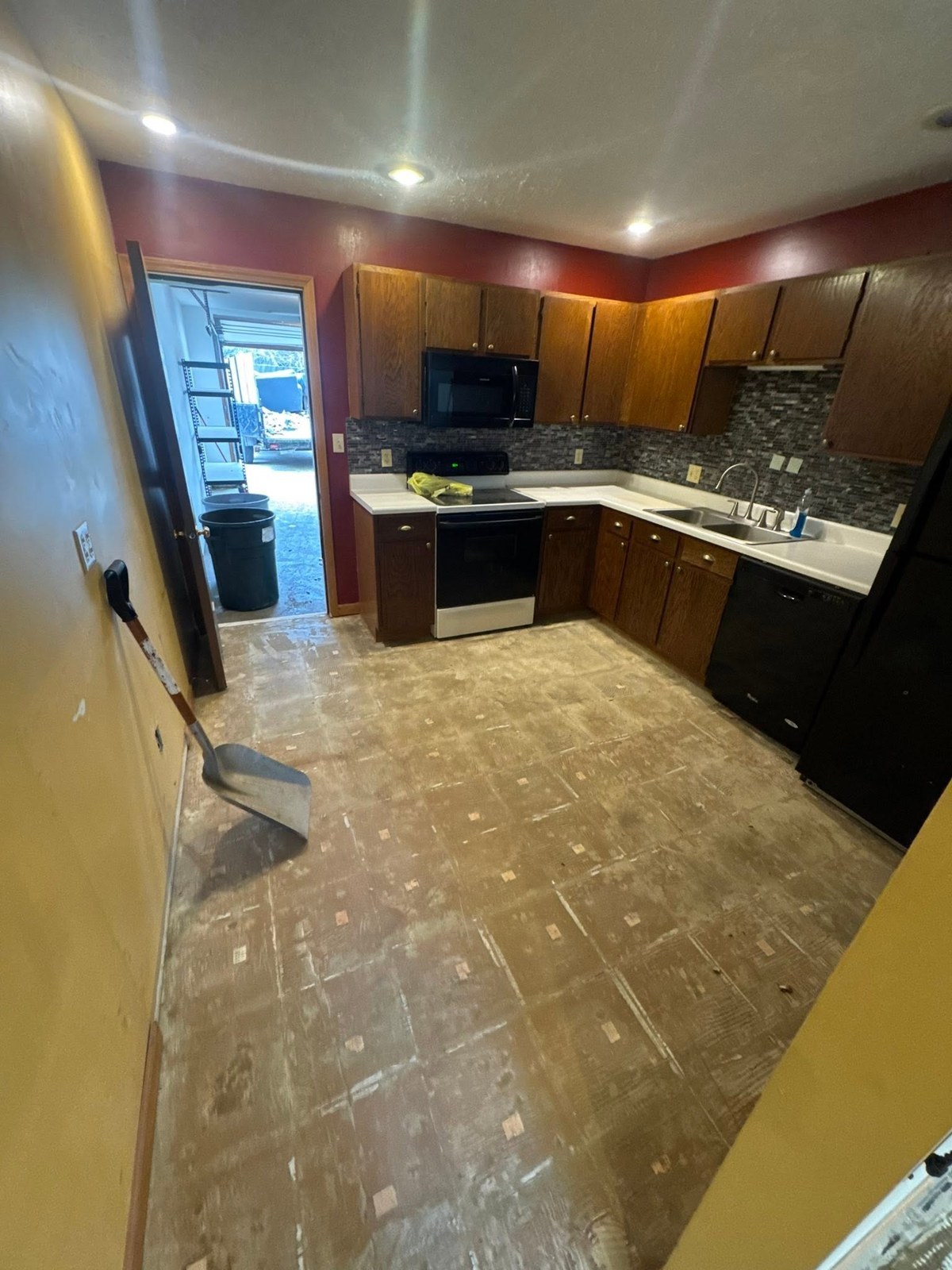
A gutted kitchen in a Springfield ranch, a farmhouse basement in Cass County, a rental turnover in Jacksonville: all standard dumpster material. When the job is mostly one category, like a remodel tear-out, tell us up front so we can talk size and weight before the drop.
What cannot go in a rental dumpster (most of the time)
The no list is shorter than people expect, and nearly all of it comes down to one thing: if the landfill will not take it at the gate, we cannot take it in the trailer. Rules differ from one landfill to the next, so the honest answer on a few of these is “ask us when you book.”
- Tires. A stack from behind the machine shed needs special handling, so ask when you book or check with your city or county.
- Paint, stain, solvents, and any liquid. Every can of paint counts, wet or dried: keep it out of the load, mention it when you book, and check with your city or county.
- Electronics. TVs, computers, monitors, and printers cannot go in a rental dumpster. Our crew takes them instead and recycles them where possible.
- Batteries. Car, tractor, mower, and the lithium packs in cordless tools.
- Propane tanks and pressurized cylinders. Grill tanks, torch bottles, old fire extinguishers.
- Chemicals. Farm chemicals, pesticides, pool chemicals, used oil, antifreeze, and unlabeled drums.
- Asbestos. Suspected in older tile, pipe wrap, or siding. Keep suspected asbestos out, ask when you book, and check with your city or county.
- Refrigerant appliances. For a fridge, freezer, window unit, or dehumidifier, tell us it has refrigerant when you book and we will say how to handle it.
Farm cleanups around Arenzville and Chandlerville are where this list matters most. An old barn tends to hold thirty years of tires, half-used sprayer chemicals, and a chest freezer that quit decades ago. None of that is a reason to skip the cleanup. It is a reason to text us a photo first.
Goes in, ask first, stays out: the quick table
| Goes in | Ask first | Stays out |
|---|---|---|
| Furniture and mattresses | Concrete, brick, block | Tires |
| Boxes and household junk | Dirt, sod, gravel, sand | Paint of any kind, stain, solvents |
| Drywall, lumber, cabinets, trim | Full roofing tear-offs | Batteries of any kind |
| Carpet, tile, hardwood | Fridges, freezers, AC units | Propane and pressurized tanks |
| Fence boards and deck lumber | Gas stoves and gas water heaters | Farm and pool chemicals, oil, unlabeled drums |
| Brush, limbs, yard waste | Treated or railroad ties | Suspected asbestos, medical waste |
| Washers, dryers, electric stoves | Soaked carpet and drywall | TVs, computers, and other electronics |
The middle column is usually workable. It just needs a conversation about weight or a separate run before the trailer shows up.
Dumpster weight limits: why concrete, dirt, and shingles are different
A dump trailer is rated by weight, not just volume. Couches and cardboard fill the space long before they get heavy. Concrete, brick, dirt, and shingles do the opposite: they hit the weight limit while the trailer still looks half empty.
Picture a broken patio slab in Chatham or the block foundation from an old milk house. A few feet of that across the floor can outweigh a whole house worth of furniture. Overloaded, the trailer will not tow safely. That is why heavy material is always an “ask first” item: talk to us before you load any concrete, dirt, or rock.
Roofing sits in between. Shingles from a small ranch fit fine in a 15 yard. A two-layer tear-off on a two-story in Springfield is a weight question, not a space question, so tell us the square count and the layers when you book.
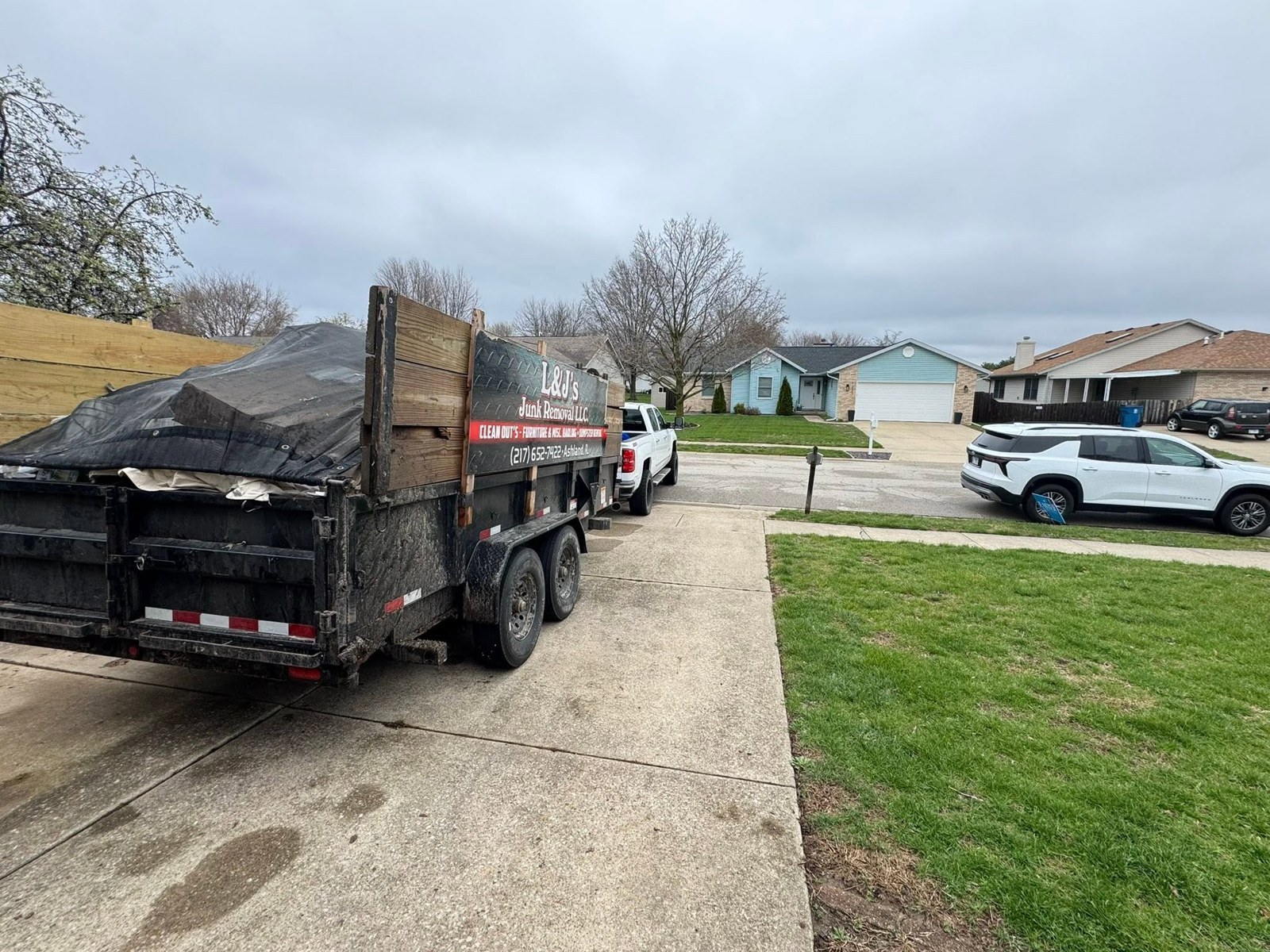
How to load a dump trailer dumpster the right way
Loading well is the difference between a dumpster that holds the whole project and one that fills up on day two with air. The crew’s habits:
- Heavy and flat on the bottom. Doors, countertops, sheet goods, and any dense material go in first, laid flat across the floor.
- Break furniture down. Pull legs off tables, knock apart bed frames, nest the dresser drawers. A couch upright takes triple the space of a couch broken down.
- Fill the gaps. Boxes, cushions, and bagged junk go in the holes between the big pieces, not on top of them.
- Keep the tailgate area clear. The last few feet by the gate is where the crew swings the door and secures the load. Do not wedge a dresser in there.
- Nothing above the rails. If it sticks up over the top rail, it cannot be tarped and it is not leaving the driveway.
- Bag the small stuff. Loose insulation and sawdust blow out on the highway. Bag it or it stays.
Load it like you are packing a truck bed for a long drive. Flat stuff first, heavy stuff low, and if you would not want it flying out on Route 125, do not leave it loose on top.
River-town basements are a special case. After a wet spring in Beardstown, soaked carpet and swollen drywall weigh far more than they look. Pull the carpet in strips, let it drain a day if you can, and load it low. Or book a basement cleanout and let the crew do the carry up the narrow stairs.
What happens if something prohibited ends up in the load
It happens. A can of stain gets buried under drywall, or a helper tosses in the mower battery without thinking. Talk to us before pickup, not after.
Text us what went in and roughly where, and we will tell you where things stand. The simpler habit is to ask before loading: when an item gives you pause, set it beside the trailer and send us a photo before it goes in. And if you are looking at a dusty container with no label in a barn near Athens, do not put it in and hope. Send us the photo first.
The other option: let the crew sort it and haul it
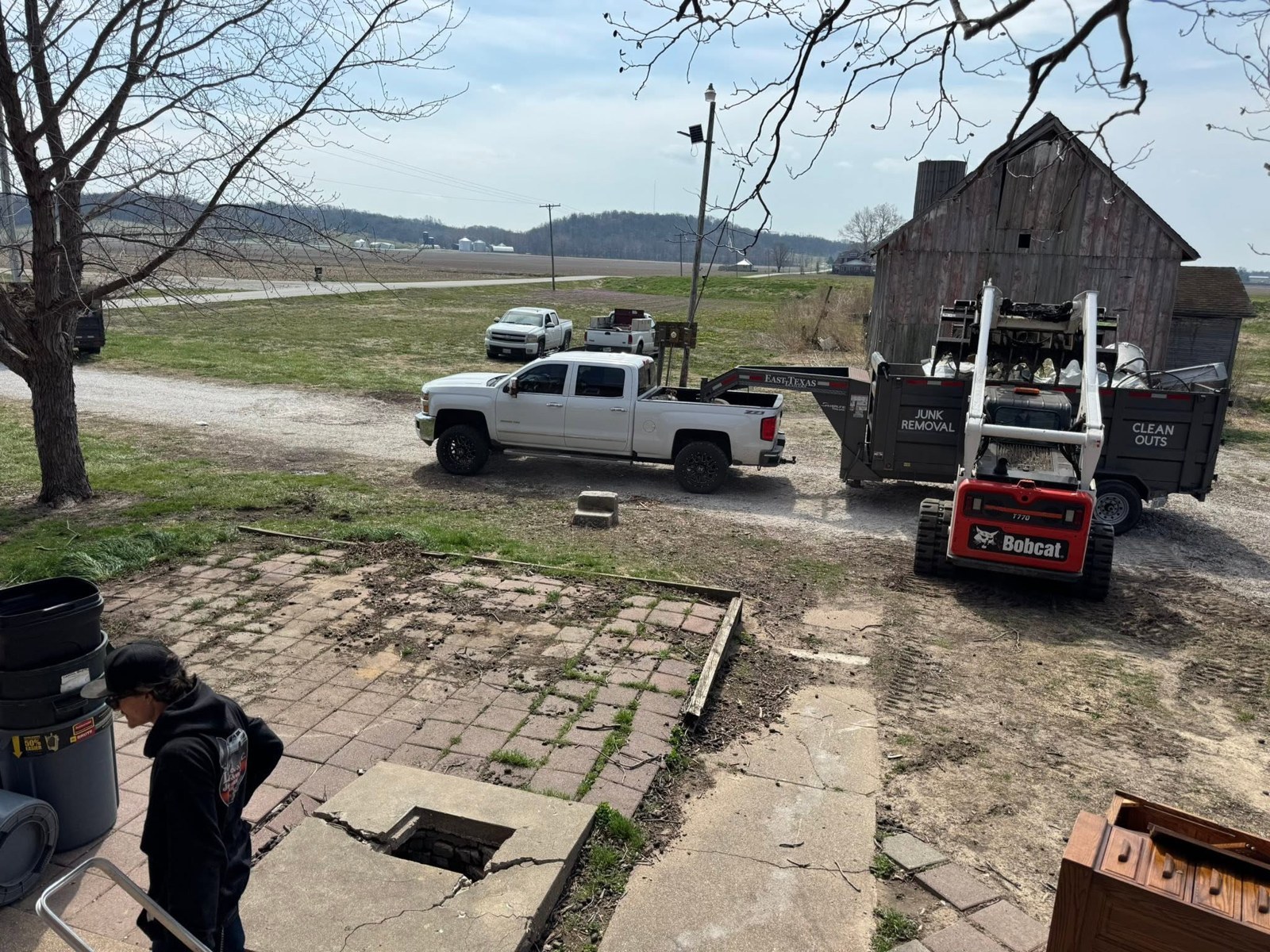
If the no list made the project feel like more work than it did an hour ago, book full-service junk removal instead. You point at the piles and the crew loads the trailer, including the TVs and computers a rental dumpster cannot take, recycled where possible. Appliances with refrigerant (tell us about them when you book), metal we can recycle, and furniture still good enough to donate get sorted on the spot when we can.
That is the route most people take for a full farm cleanup, an estate in Jacksonville, or a flooded basement. Rent the dumpster when you know what you have and want to work at your own pace. Call the crew when you would rather not think about the sorting. In Springfield and everywhere else we serve, both start the same way: a photo texted to (217) 624-7066 and a straight answer back.
Questions people ask
What can you put in a rental dumpster in Central Illinois?
L&J’s Junk Removal takes furniture, mattresses, boxes, household junk, drywall, lumber, cabinets, flooring, shingles, fence boards, brush, and appliances that do not hold refrigerant in its 15 and 20 yard driveway-friendly dumpsters. Talk to us first before loading any concrete, dirt, or rock. Text a photo of your pile to (217) 624-7066 or book a dumpster online.
What can you not put in a dumpster rental?
L&J’s cannot take tires, paint, solvents, batteries, propane tanks, farm or pool chemicals, used oil, suspected asbestos, or electronics like TVs and computers in a rental dumpster. The hazardous items need special handling, so ask when you book or check with your city or county; the crew can take the electronics and recycle them where possible. For a fridge, freezer, or AC unit, tell us it has refrigerant when you book and we will say how to handle it. Unsure? Text a photo to (217) 624-7066.
Can I put a refrigerator or freezer in a rental dumpster?
L&J’s Junk Removal asks one thing before a fridge, freezer, window AC unit, or dehumidifier goes in a rental dumpster: tell us it has refrigerant when you book and we will say how to handle it. The crew can also take it as a separate appliance pickup. Call or text (217) 624-7066 or request a free estimate with a photo of the unit.
Can you put concrete, dirt, or brick in a dumpster?
L&J’s Junk Removal treats concrete, dirt, brick, and block as ask-first material because a dump trailer is rated by weight, and a few feet of broken slab can max it out while the trailer still looks empty. A rental dumpster can take concrete in limited amounts, but talk to us before loading any concrete, dirt, or rock. Text a photo and a rough size to (217) 624-7066 and we will tell you the right way to handle it.
How do you load a dump trailer dumpster so it holds the most?
L&J’s crew loads heavy and flat items on the floor first, breaks furniture down to its parts, fills gaps with boxes and bags, keeps the last few feet by the tailgate clear, and never stacks above the top rail. Loose material like insulation gets bagged so it cannot blow out on the road. Follow that order and a 15 yard holds a surprising amount. Book your dumpster and mention where you would like it set.
What happens if I put something prohibited in a rental dumpster?
L&J’s Junk Removal would rather hear about it before pickup than find it at the landfill. If a can of stain or a battery ended up in the load, text us what and roughly where, and we will tell you what comes next. Better yet, ask before loading anything you are unsure of and keep it out of the trailer until you hear back. Call or text (217) 624-7066 and we will sort it out.
Not sure what goes in? Send us a photo.
Text a picture of the pile, the barn, or the basement and we will tell you what fits in a dumpster, what needs a separate plan, and whether the crew should just load it for you instead.
(217) 624-7066